Encryption Standards for Mobile Blackjack: Navigating Jurisdictional Requirements
Written by Otto Simon · Aug 17, 2026
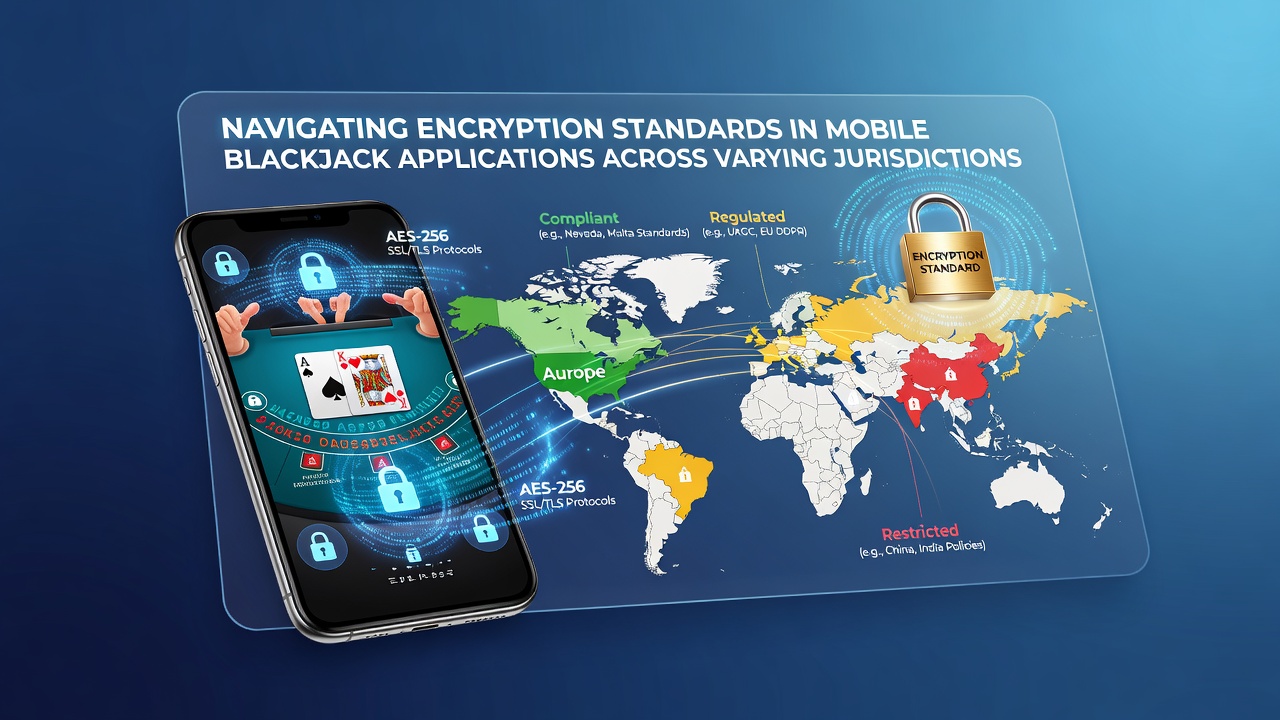
Encryption Standards for Mobile Blackjack: Navigating Jurisdictional Requirements
Developers of mobile blackjack applications must align their security frameworks with encryption requirements that shift from one jurisdiction to another, and these frameworks rely on protocols such as AES-256 combined with TLS 1.3 to protect player data during live sessions. Regulatory bodies in different regions set distinct benchmarks for key length, certificate management, and audit frequency, which means operators often maintain separate configurations for each market they serve.
Core Technologies Supporting Data Protection
Most platforms encrypt card shuffle sequences, account credentials, and transaction records with symmetric algorithms that meet or exceed 256-bit standards, while asymmetric exchanges handle initial handshakes through RSA or elliptic-curve methods approved by local authorities. In August 2026, several North American operators reported completing upgrades to post-quantum hybrid schemes in anticipation of forthcoming federal guidance, yet they continued to rely on established TLS configurations for day-to-day traffic.
Observers note that mobile operating systems impose additional constraints because iOS and Android enforce their own certificate pinning rules, and developers must therefore test each build against jurisdiction-specific cipher suites to avoid connection failures during regulatory spot checks.
Regional Differences in the United States
Nevada’s Gaming Control Board requires annual penetration testing of all encryption modules used in mobile blackjack, whereas New Jersey’s Division of Gaming Enforcement focuses on real-time logging of key rotation events and mandates submission of those logs within 24 hours of any incident. Pennsylvania follows a hybrid model that incorporates elements from both states, and operators active across these markets maintain unified dashboards that tag each data stream by licensing authority so compliance teams can isolate records quickly during audits.
Approaches Taken in Canada and Australia
Canada’s provincial regulators, including the Alcohol and Gaming Commission of Ontario, emphasize end-to-end encryption for all live dealer feeds and require that decryption keys remain within national borders. Australian authorities apply similar geographic restrictions while also demanding compatibility with the country’s privacy legislation, which affects how session tokens are stored on user devices. Operators therefore deploy region-locked key vaults that automatically route traffic through local gateways, reducing latency while satisfying data-residency rules.
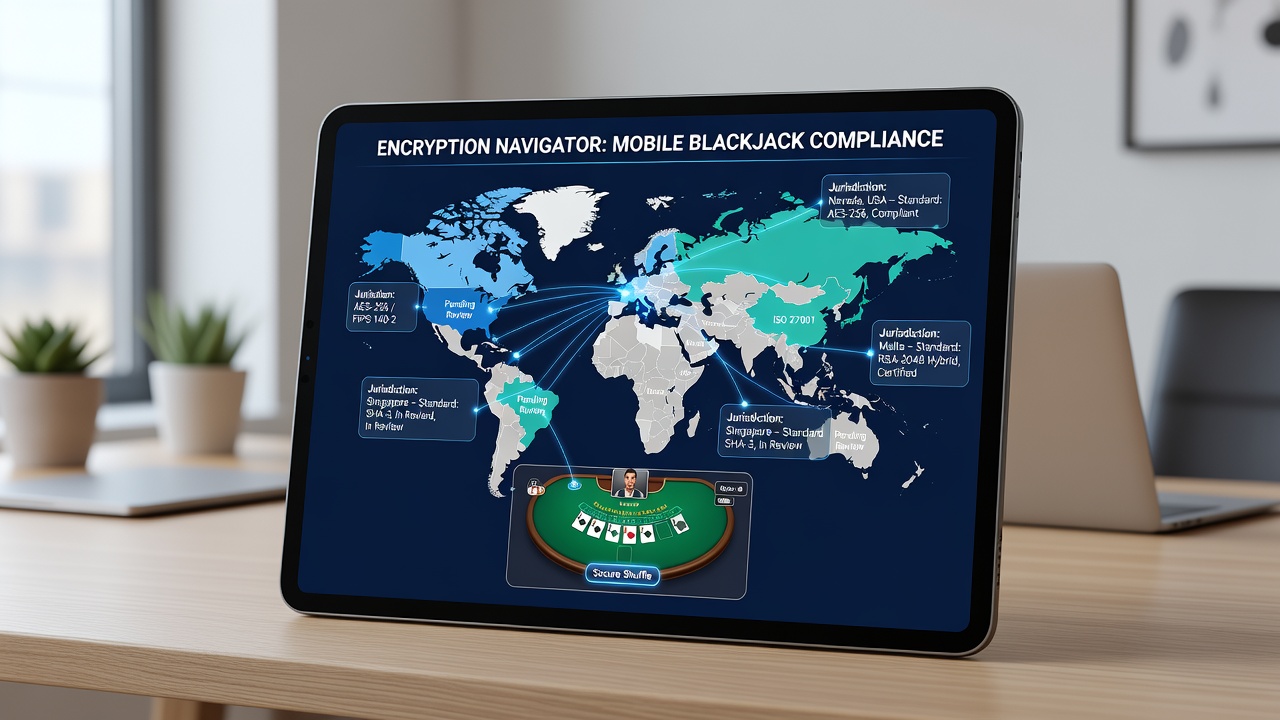
European and Asian Frameworks
Within the European Union, the General Data Protection Regulation intersects with gambling-specific directives, so encryption policies must address both player consent records and financial transaction security; Malta’s gaming authority, for example, conducts quarterly reviews of cipher-suite inventories. In parts of Asia, regulators in Singapore and Macau focus on preventing man-in-the-middle attacks on 5G networks, which has prompted operators to adopt certificate transparency logs and mandatory multi-factor authentication tied to device biometrics.
Operational Challenges and Adaptation Strategies
Because each jurisdiction publishes its own list of approved algorithms and deprecation timelines, development teams build modular encryption libraries that allow rapid swapping of individual components without full app resubmission. One study released by a European research consortium in early 2026 found that operators using containerized security modules reduced certification turnaround times by roughly 30 percent compared with those relying on monolithic codebases.
Network variability adds another layer of complexity, since mobile carriers in certain markets still default to older TLS versions; applications therefore negotiate the strongest mutually supported protocol on a per-connection basis while logging any fallback events for later review by compliance officers.
Conclusion
Encryption standards for mobile blackjack applications continue to evolve as regulators refine their expectations and new threats emerge, yet the underlying requirement remains consistent across borders: protect player information through vetted algorithms, maintain auditable key-management practices, and adapt configurations to satisfy each licensing authority’s current specifications. Organizations that track regulatory updates and implement flexible technical architectures position themselves to meet these shifting demands without interrupting service.