Mapping Secure Channel Protocols Across Poker Network Expansions in Mobile Ecosystems

Secure channel protocols form the backbone of data protection in poker networks, and their mapping becomes essential as operators expand operations into mobile ecosystems where device diversity and network variability introduce new variables. Researchers track how protocols such as TLS 1.3 and DTLS integrate with platform-specific security frameworks on iOS and Android while maintaining consistent encryption standards across expanding user bases. Data indicates that network operators must align these protocols with evolving mobile operating system requirements to preserve session integrity during real-time card exchanges and financial transactions.
Core Protocols in Current Poker Network Architecture
Protocol mapping starts with identification of the primary encryption layers that handle authentication, key exchange, and data integrity in poker applications. Observers note that most networks rely on TLS 1.3 for transport security, supplemented by additional measures like certificate pinning and hardware-backed keystores on mobile devices. Studies from the National Institute of Standards and Technology highlight how these protocols reduce handshake latency while strengthening forward secrecy, and this matters during rapid network growth when thousands of simultaneous sessions occur across cellular and Wi-Fi connections.
Expansion phases require operators to verify that each new market integration preserves protocol compatibility without introducing downgrade vulnerabilities. Those who have examined deployment logs report that mismatches between server configurations and mobile client libraries often surface during the first weeks of a regional rollout, prompting immediate adjustments to cipher suite priorities.
Mobile Ecosystem Expansion Patterns Observed in 2026
Network growth into mobile platforms accelerated through the first half of 2026, and July 2026 marked several coordinated updates across major operators seeking to standardize secure channel implementations. Figures reveal that Android 15 and iOS 19 releases introduced stricter attestation requirements, forcing poker platforms to update their protocol stacks to maintain compliance with device integrity checks. Expansion teams map these changes by testing protocol behavior under varying signal conditions and background process restrictions typical of mobile environments.
One documented approach involves layering protocol handlers that adapt dynamically to device capabilities, allowing seamless transitions between cellular data and local Wi-Fi while preserving end-to-end encryption. Researchers discovered that such adaptive mapping reduces connection drops during hand transitions in tournament play, and this stability supports continued user engagement across expanding geographic footprints.
Protocol Mapping Across iOS and Android Platforms
Detailed mapping exercises compare how each mobile operating system implements secure channel components. iOS uses its Secure Enclave for key storage and integrates with the Network framework for TLS handling, whereas Android relies on the Keystore system and Conscrypt provider for similar functions. Those mapping these differences find that synchronization of certificate validation paths across both platforms prevents man-in-the-middle risks when networks add new regional endpoints.
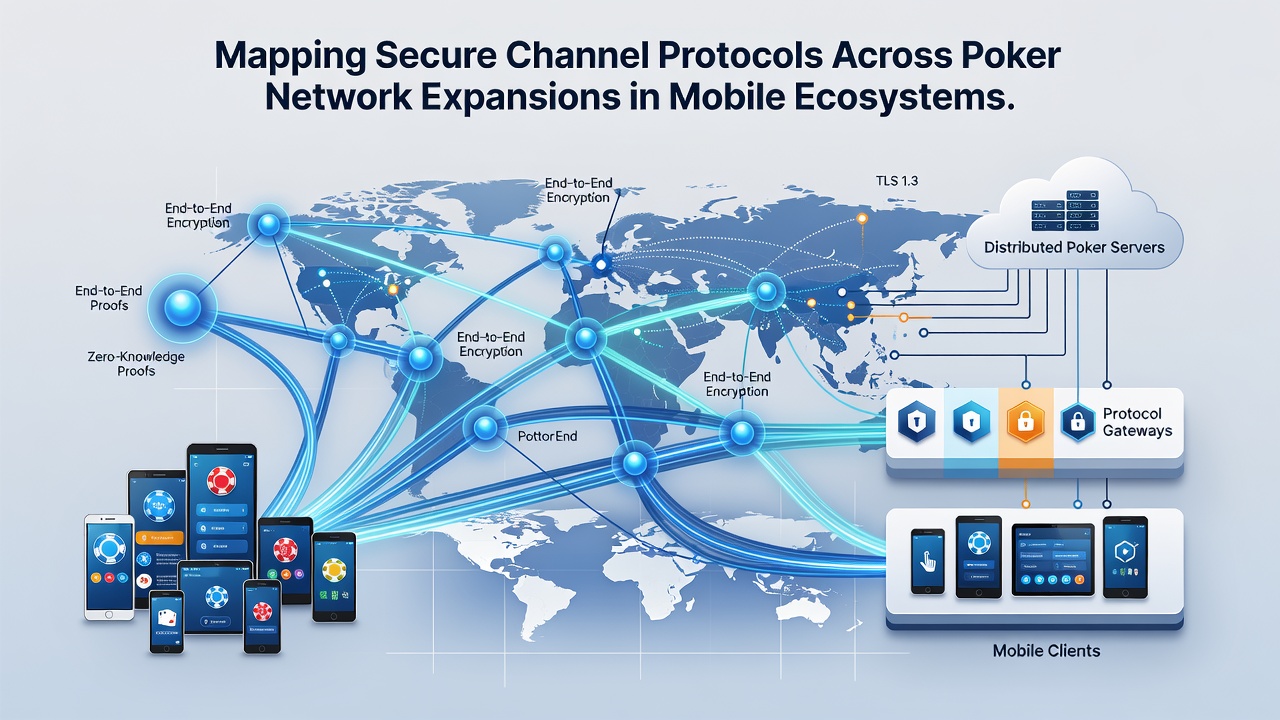
Cross-platform testing conducted in mid-2026 demonstrated that unified protocol policies improve resilience against protocol stripping attacks. Data from industry monitoring groups shows that networks employing centralized policy engines for cipher selection experience fewer security incidents during expansion windows compared with decentralized approaches.
Security Considerations During Network Growth
As poker networks scale mobile offerings, protocol mapping must account for regulatory reporting obligations that differ by jurisdiction. Operators coordinate with bodies such as the Alcohol and Gaming Commission of Ontario to document encryption standards used in player data flows. This documentation supports audit trails required when new markets open, and it ensures that secure channel configurations align with local data residency rules.
Additional layers such as application-level encryption and tokenization complement transport protocols, creating defense-in-depth strategies that remain consistent across device types. Observers note that these combined measures become particularly relevant when networks introduce live dealer features that transmit video and betting data simultaneously over mobile connections.
Conclusion
Mapping secure channel protocols across poker network expansions in mobile ecosystems requires ongoing alignment between technical implementations, platform updates, and regulatory expectations. Continued documentation of protocol behavior under real-world mobile conditions supports stable operations as networks reach new users and device configurations. Data indicates that systematic mapping reduces friction during growth phases and maintains the confidentiality and integrity expected in modern poker environments.