Verification Layers and Their Influence on Bonus Redemption Across Unified Slot Platforms
Written by Harper Neumann · Aug 24, 2026
Verification Layers and Their Influence on Bonus Redemption Across Unified Slot Platforms
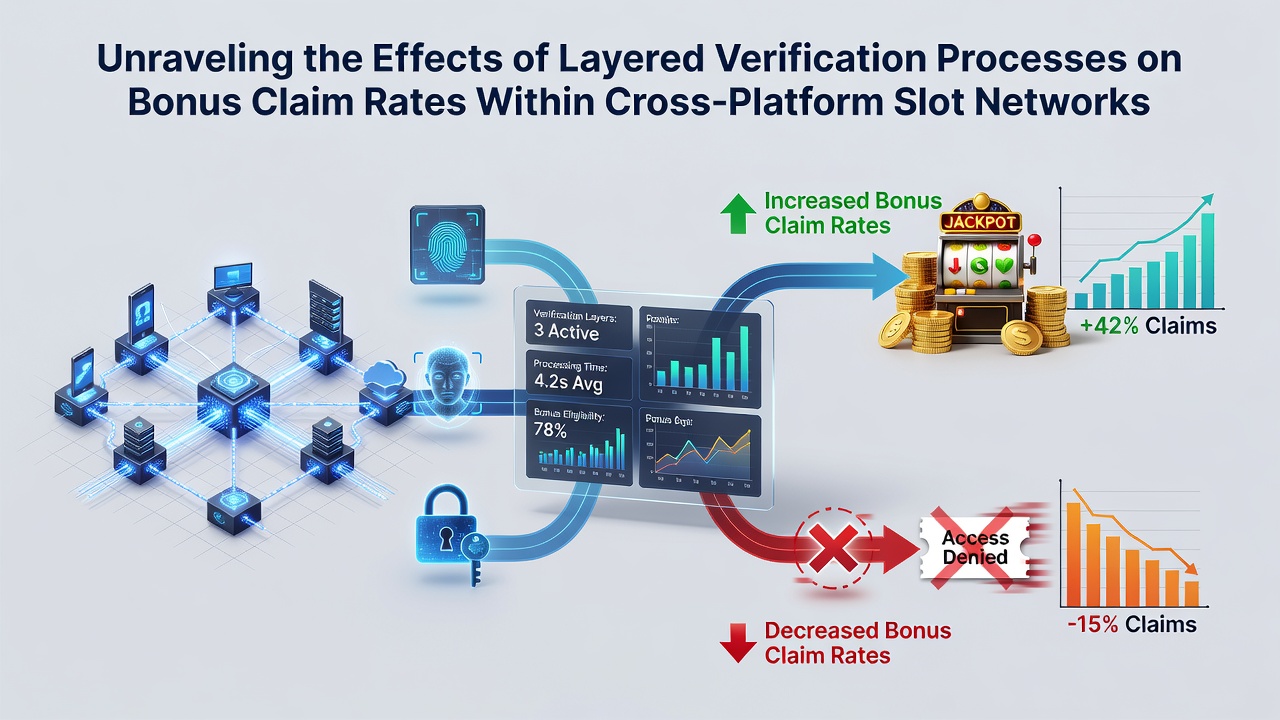
Cross-platform slot networks connect multiple operators through shared player databases and promotional pools, which creates opportunities for bonus distribution yet also requires verification steps that can alter claim behavior. Data from August 2026 indicates that networks operating in the United States and parts of Europe processed over 14 million bonus offers in the preceding quarter, with redemption rates varying according to the number of authentication layers applied before funds became available for play.
Core Components of Layered Verification
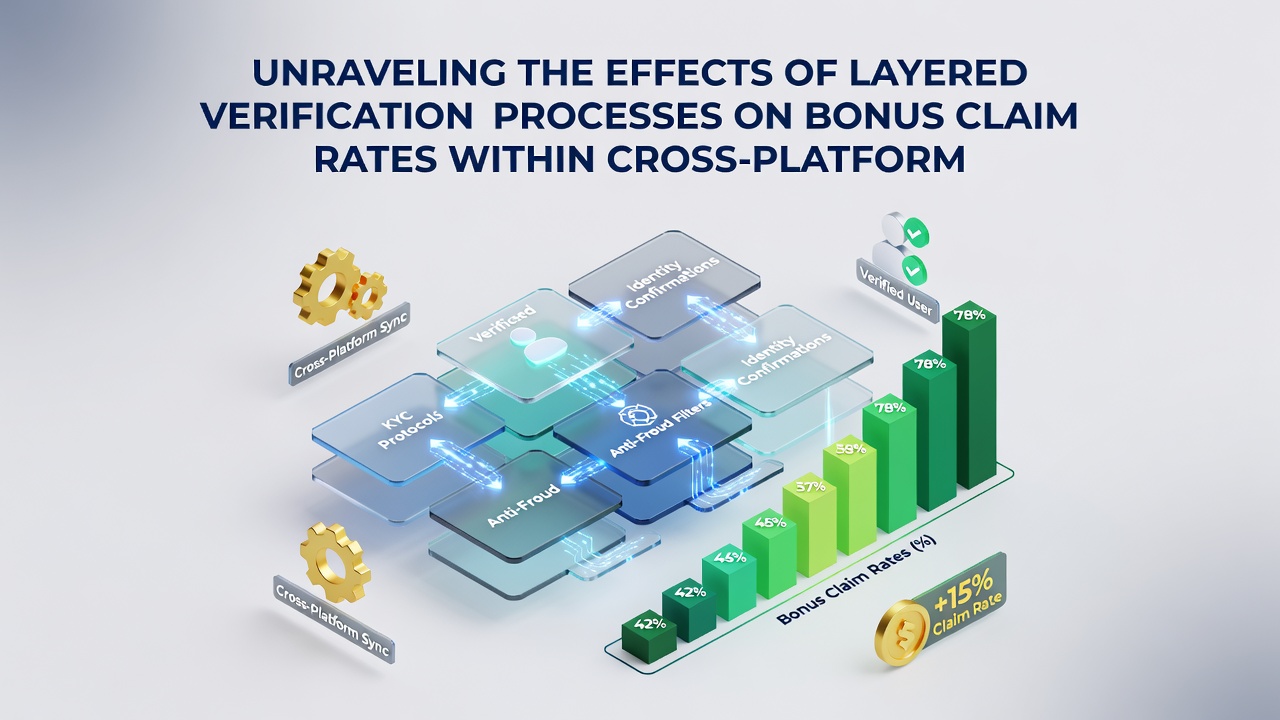
Operators typically combine identity confirmation, device fingerprinting, transaction monitoring, and sometimes biometric checks into sequential gates that players must pass. Each additional gate adds time and data entry requirements, and studies compiled by the Nevada Gaming Control Board show that networks using four or more layers recorded average claim completion rates 18 percent lower than those limited to two steps. The pattern holds across desktop and mobile interfaces, although mobile users encounter slightly higher drop-off when facial recognition follows an initial SMS code.
Impact on Claim Rates in Shared Environments
Because cross-platform systems allow a single verified account to access bonuses from several operators, the verification burden often occurs at the network level rather than within each casino. Figures released by the Australian Communications and Media Authority reveal that integrated networks in the Asia-Pacific region experienced a 12 percent rise in partial claims during the first half of 2026, with many players completing the first two verification stages but abandoning the process when a third financial-source check appeared. Those who persisted through all steps showed higher long-term retention, yet the immediate claim volume declined.
Regional Variations Observed in Mid-2026
Markets with stricter data-protection rules tend to require more explicit consent screens, which lengthens the sequence. In Canada, provincial regulators noted that networks incorporating geolocation checks alongside standard KYC forms saw bonus claims fall by roughly one-quarter compared with platforms that relied solely on account-level verification. Conversely, networks in jurisdictions permitting pre-verified player wallets maintained steadier redemption percentages even when additional fraud-detection modules ran in the background.
Technical Interactions and Player Pathways
Slot networks that synchronize verification status across operators reduce repeated data entry, yet synchronization itself depends on secure APIs that sometimes introduce latency. When delays exceed eight seconds between steps, completion rates drop measurably according to internal telemetry shared by several major platform providers. Players who begin the process on one device and attempt to finish on another face further friction because session tokens may expire, prompting a restart of one or more verification stages.
Statistical Patterns Across Networks
Aggregated reports from industry research groups indicate that bonus offers requiring only email and phone confirmation achieve redemption rates near 67 percent, while offers gated by identity document upload plus live facial matching fall to 41 percent. The difference narrows when networks offer in-app assistance during the verification sequence, suggesting that support mechanisms can offset some of the friction introduced by additional layers. Data collected through August 2026 continues to track these metrics as operators test streamlined flows that maintain security without extending session duration.
Conclusion
Layered verification processes directly correlate with shifts in bonus claim volumes inside cross-platform slot environments, and operators continue to monitor how each added step modifies completion statistics. Networks that balance security requirements against user effort report more consistent redemption patterns, while those that apply uniform multi-stage checks across all promotions observe measurable declines in immediate uptake. Ongoing data collection through the remainder of 2026 will clarify whether adaptive verification sequences can preserve security standards while supporting higher claim rates across interconnected platforms.